.jpg)
TRACES OF ISLAM IN CONSTANTINOPOLIS
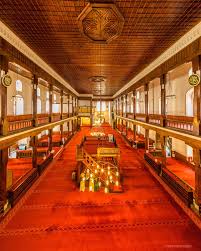
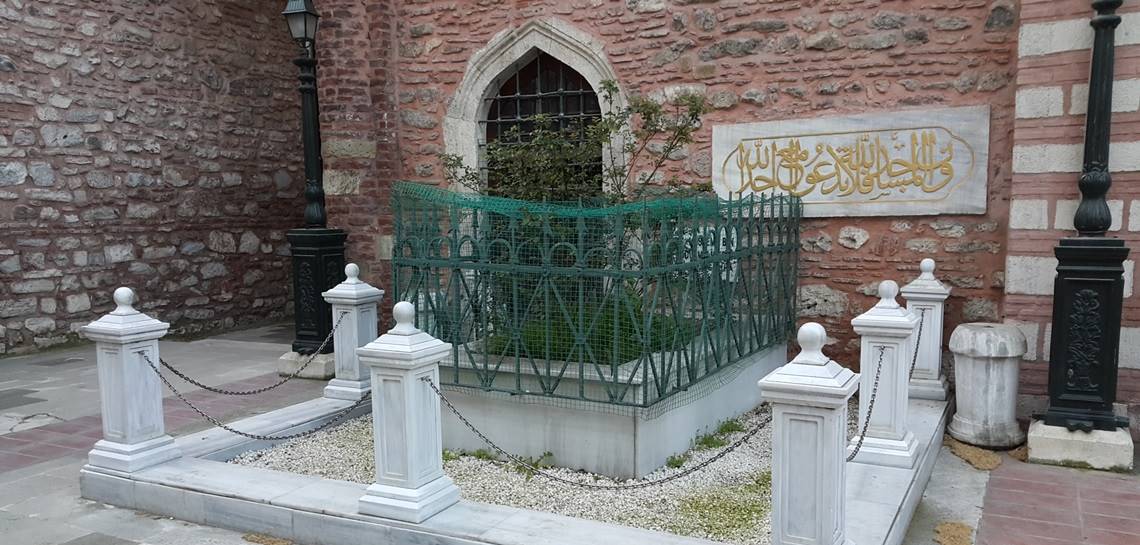
The words of the Prophet Muhammad (peace be upon him) heralding that Istanbul would be conquered and praising those who would campaign here created great enthusiasm among Muslims; they besieged Constantinopolis many times. The first of these was the army under the command of Yazid bin Muawiya, in which some of the Companions (Sahaba) who were still alive also took part. Abu Ayyub al-Ansari passed away during this siege and was buried at the foot of the city walls. Among the graves of the Companions in Turkey, this one is the most certain. Everyone, including the Byzantines, showed respect to this grave; it was visited for years: sultans girded on the sword here. The graves of the Companions who participated in the siege or the places where they were stationed were later discovered and turned into places of visitation. But these are not the only Muslim traces in Byzantine lands.
The Adventure of Maslama
These are not the only traces left by Muslims in Constantinopolis. The Umayyad caliph Abd al-Malik sent his son Maslama to Anatolia as the commander-in-chief of the Muslim armies. In 696, Erzurum and Trabzon fell. In 706, he appointed him to conquer Istanbul. Maslama came to Tarsus and from there to Amorion with a large army that included some Companions. Here, a great victory was achieved against a Byzantine army of 120,000. The commander of the army’s forward outpost was Sayyid Battal Ghazi, and it was he who killed the enemy commander. Amorion is today near Emirdağ of Afyon.
Maslama established a friendship with Leon, the governor of Amorion. He ensured that Leon became emperor. But Leon later, true to his nature, turned his back. When Walid bin Abd al-Malik became caliph, he had preparations made for the siege of Istanbul. After conquering Ankara and Eskişehir, Maslama stayed in Çanakkale (Dardanelles) for eight months and had light ships built by Greek craftsmen. He came to Gallipoli and from there to the front of Istanbul. Sulayman ibn Abd al-Malik, who succeeded Walid, also sent reinforcements by sea with ships.
After battles that continued at intervals for a long time, heavy losses were suffered. The Byzantines burned the fleet. The reinforcements coming from Anatolia were also defeated and withdrew. An agreement was made with the emperor to pay an annual tribute of 10,000 okkas (a unit of mass, approximately 1.28 kilograms) of silver, 6,000 okkas of gold, and 5,000 mares. Accordingly, Maslama and his entourage recited the call to prayer (adhan) and performed prayers in Hagia Sophia. He sold the pearl- and ruby-adorned crown gifted by the emperor for 100,000 gold coins and distributed it among the soldiers. They lived in Karaköy for several years and built the Arab Mosque. Since it was a threat to the Greeks, this place was called Madinat al-Qahr (City of Subjugation; Kahırköy). The soldiers planted apple and pear trees and even ate their fruit.
Meanwhile, Sulayman passed away and Umar bin Abd al-Aziz became caliph. Upon his order, Maslama and his entourage returned. On the way, battles took place in Eskişehir and Ankara. In Eskişehir, most of the army perished due to the plague. Finally, they arrived in Damascus. Maslama died in Damascus in 740. These events were narrated by Sa‘id ibn Qays al-Hamdani, one of Maslama’s officers, and have reached our time through a chain of transmission.
Maslama was very generous. He was the most capable of the brothers and the most suitable for the caliphate. However, since his mother was a concubine, he remained in the background. He asked Caliph Walid for land to rehabilitate; Walid gave him a marshy area in Iraq. By opening two canals, he reclaimed this land and turned it into fertile soil.
After Maslama withdrew, the Byzantines broke their promise and turned the mosque into a church. During the reign of Sultan Murad IV, its original location was rediscovered and it was converted back into a masjid. The mother of Sultan Mahmud I, Saliha Sultan, renovated the mosque in 1734.
Today, the Underground Mosque in Karaköy is also a structure that was converted into a mosque by Maslama. Previously, it was a granary of the Galata walls. It is known as Kurşunlu Mahzen. Grand Vizier Mustafa Pasha had the granary cleaned in 1749. Three graves were seen inside. It had been abandoned, with its door closed and its lock sealed with lead, for more than a thousand years. Sultan Mahmud I turned it into a mosque, and later a minaret was also built.
The Twin Sultanas
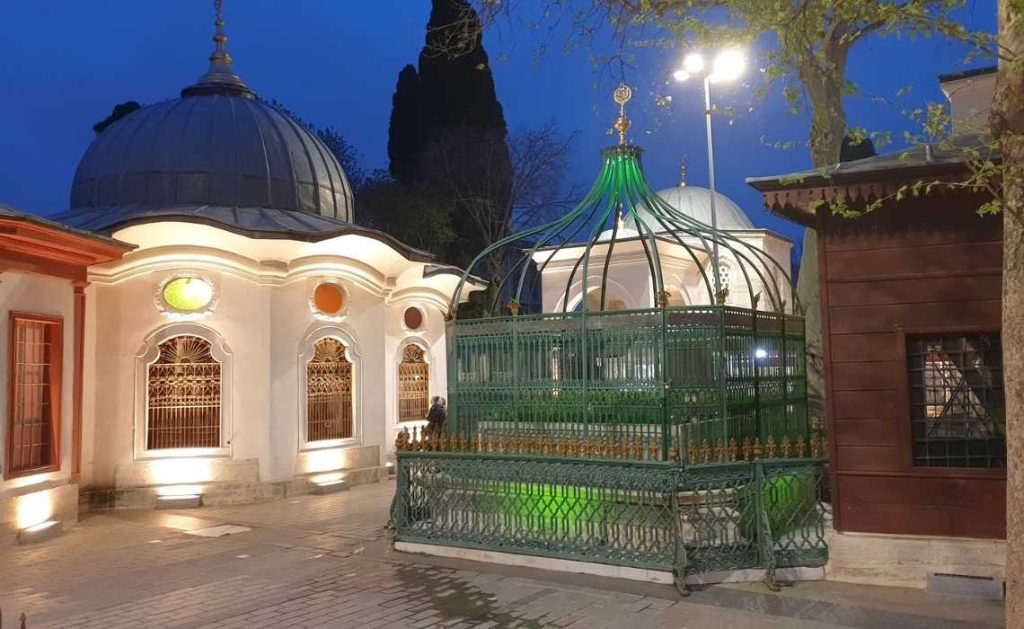
They are two girls named Fatima and Sakina, descendants of Husayn ibn Ali. They were captured in one of the Syrian battles and sent to Emperor Constantine II. They were kept at the place where today’s Kocamustafapaşa Mosque stands, which at that time was a convent school, and were forced to convert to Christianity. The emperor thought of marrying the girls to his sons; forty days were granted to them. The emperor’s daughter Katerina, who was of the same age, went to meet these girls out of curiosity; admiring their state and miracles, she became Muslim and took the name Siddika. The girls implored God to take their souls. On the forty-first day, those who went to the cell found all three dead, embracing one another. The girls were buried there, and the emperor’s daughter was buried at the entrance.
Sümbül Sinan Efendi (a Sufi scholar) identified their place and made a will saying, “Bury me at their feet and at a lower level.” Upon a dream he saw, Sultan Mahmud II had the surroundings and the top enclosed with an elegant iron railing. The Twin Sultanas were formerly a shrine visited by women who could not have children and where vows were made. Travelers of the 12th century mention this grave within the city walls. It is believed that next to the emperor’s daughter lies the wife of Jabir ibn Abdullah, one of the Companions who participated in the siege. There are also narrations that Husayn ibn Ali participated in the siege.
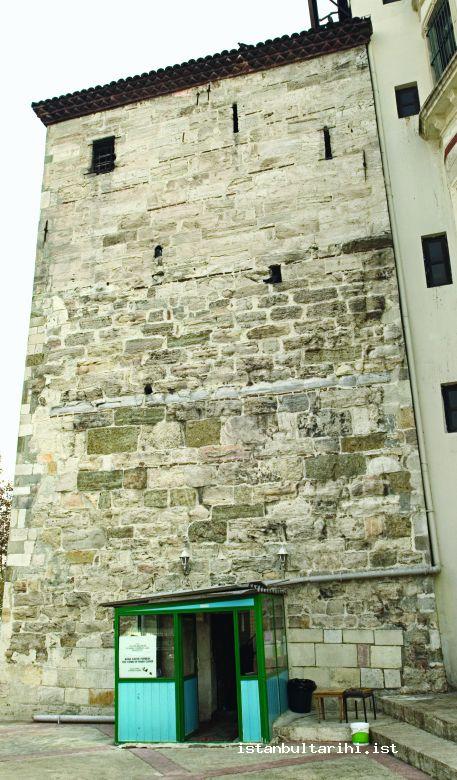
Baba Jafar
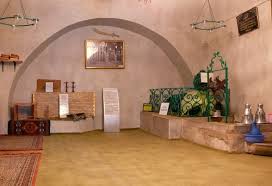
The Abbasid caliph Harun al-Rashid had sent two envoys named Sayyid Baba Jafar and Maqsood to Istanbul to make peace. Under the framework of earlier peace agreements, there was a Muslim quarter in Kocamustafapaşa. At this time, a disturbance broke out between the two peoples; blood was shed. When Sayyid Jafar saw that even the burial of Muslim dead was not permitted as he walked around the city, he was deeply grieved. Because he told Emperor Nikephoros I that no one who believed in God could commit such cruelty, he was imprisoned. Maqsood, on the other hand, calmed the emperor and ensured the burial of the dead.
According to the narration, Sayyid Jafar displayed miracles in the dungeon, and the jailer became Muslim and took the name Ali. The emperor, becoming worried, had Sayyid Jafar and the jailer poisoned and killed. Those in the dungeon buried both of them there. The Byzantines turned the graves of these friends of God into a place of visitation, and after the conquest, Sultan Mahmud II renovated the tomb built over it. Baba Jafar, also known as Zindan Baba, was a shrine where women whose children did not survive came and made vows. It is next to Zindan Han in Eminönü.
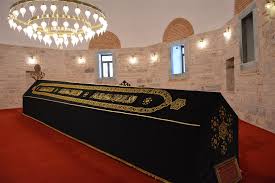
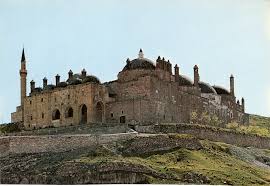
Sayyid Battal Ghazi
Muslims conquered from Byzantium Syria, Egypt, North Africa, Cyprus, the Aegean islands, and Anatolia including Cappadocia. One of these conquerors is known as Battal Gazi.
Battal Ghazi’s real name was Abdullah. “Battal” is a title meaning the valiant or the heroic warrior, given because of his bravery. Information about his lineage varies. He gained such fame in the battles fought with the Byzantines that his legends have been told in Anatolia for centuries. His name appears in very old sources, even in Byzantine histories. He was martyred at Akroinon in 740. His grave, next to an old monastery, was discovered by the mother of the Seljuk Sultan Alaeddin Keykubad I and a tomb was built over it; next to it, the town of Seyitgazi in Eskişehir was established.
It is also said that his father was martyred in the conquest of Ankara. The Husayn Ghazi Tomb here is a place of visitation.
Önceki Yazılar
-
IS IMPRISONMENT A PUNISHMENT FOR THE CONVICT, OR FOR HIS INNOCENT FAMILY?16.09.2026
-
ABORTION AND INDUCED MISCARRIAGE IN HISTORY9.09.2026
-
EUROPE SHOULD LEARN TOLERANCE FROM THE EAST2.09.2026
-
A SULTAN IN THE GRIP OF THE MASONS: MURAD V26.08.2026
-
AN ANCIENT GREEK TRADITION AMONG CHRISTIANS: THE BETTER THE DOWRY, THE BETTER THE HUSBAND19.08.2026
-
WHY DID THE PROPHET MUHAMMAD MARRY MULTIPLE TIMES? Understanding the Prophet Muhammad’s Marital Life12.08.2026
-
HOLY RELICS ADORNING ISTANBUL5.08.2026
-
AN OTTOMAN PRINCE IN THE DESERTS OF LIBYA29.07.2026
-
THE TURKS AT THE GATES OF VIENNA22.07.2026
-
THE SOLE FEMALE RULER OF TURKISH-ISLAMIC HISTORY15.07.2026