(1).jpg)
“WRITE DOWN WHAT YOU HEAR FROM ME!”
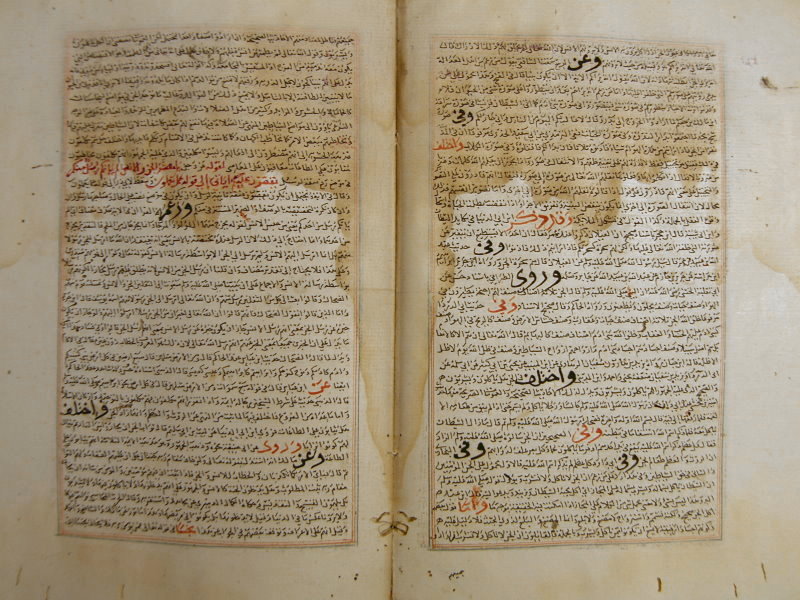
The writing down of the hadiths occurred upon the command of the Prophet Muhammad (peace be upon him). In our time, it is heard that some say, “We have nothing to say against the Quran; but we do not accept the hadiths. Because they were written long after the Prophet Muhammad.” However, these too began to be written in the same period as the ayat (verses) of the Quran al-karim.
As the verses of the Quran al-karim were revealed, the scribes of revelation would write them, by the command of the Prophet, on whatever they could find such as paper, cloth, palm branches, or bones. At first, the Sahaba (plural of Sahabi, companions of the Prophet) also attempted to write down the hadiths they heard from the Prophet. But the Prophet Muhammad prevented this out of concern that they might be confused with the Quran. Indeed, the Tawrat (the Torah) and the Injil (the Bible) had also been altered by human hands in this way. At that time, most of the Sahaba did not know how to read or write. There was a possibility that the hadiths could be written down incorrectly. Moreover, oral culture is always more reliable than written culture.
Call Your Right Hand for Help!
It is not known that the Prophet Muhammad wrote in his lifetime, except for signing the Treaty of Hudaybiya. Nevertheless, he had both diplomatic letters and administrative instructions written. He asked Zayd ibn Thabit to learn Syriac; and he learned to write in that language in 15 days. He would write the letters of the Prophet and read to him the letters that arrived.
One day, the Prophet Muhammad delivered a khutba (sermon) that contained the principles of the punishment of qisas (retaliation in kind). Upon the request of a companion named Abu Shah, who said, “Ya Rasulallah (the prophet of Allah, the messenger), write this down for me,” the Prophet commanded, “Write it for Abu Shah.” Furthermore, he would give each wali (provincial governor) a copy of the document he had commissioned to be written regarding tax amounts. Caliph Abu Bakr and Caliph ‘Umar also did the same.
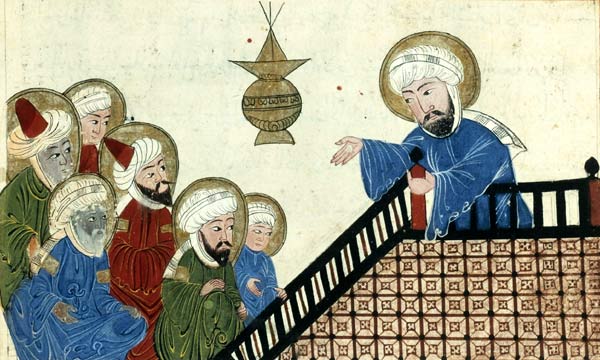
After the conquest of Mecca, when the hadiths increased and memorizing them became difficult, the Prophet Muhammad permitted them to be written down. The Prophet signalled with his finger to his own mouth and said to Abdullah ibn Amr ibn al-As: “Write! By Him in Whose hand my soul lies, nothing but truth comes out from it!” Abu Hurayra says: “A man from the Ansar (the local inhabitants of Medina who supported the Prophet) complained to Rasulullah alayhissalam about his memory. Rasulullah gave him this answer: ‘Call your right hand for help!’ and he made a gesture of writing with his hand.”
The Ring-Latched Chest
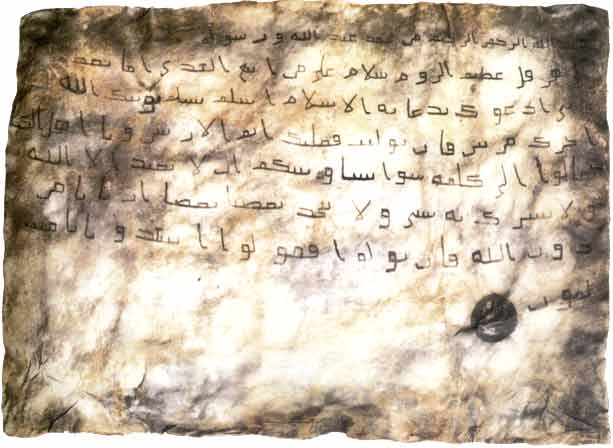
When Caliph Abu Bakr passed away, he left behind a collection containing 500 hadiths. Abdullah ibn Umar would also have hadiths written down by his freed student Nafi. Ali ibn Abi Talib kept a sheet on which he had written the hadiths he heard in the sheath of his sword. These are found in the Musnad of Imam Hanbal. The sahabi who wrote the most hadiths, Abdullah ibn Amr bin al-As, also had here his sahifa (written collection) called al-Sadiqa, which contained the hadith: “Constantinople shall definitely be conquered one day. How excellent is the commander who conquers it, and how excellent are his army.” When he was asked which of the cities Constantinople (Istanbul) or Rumiyah (Rome) would be conquered first, he brought a ring-latched chest, took out a paper from it, and said: “We were gathered around Rasulullah alayhissalam writing. This question was asked of him. Referring to Istanbul, he said, ‘The city of Hiraql will be conquered first.’”
Those who came to listen to Bara ibn Azib would write the hadiths they heard wherever they could find space, even on their palms. Anas ibn Malik had the hadiths he narrated written down by his son. Mugira ibn Shuba wrote down the hadiths he narrated and gave them to Caliph Muawiya upon his request. Said ibn Jubayr would travel day and night together with Ibn Abbas and write down what he heard. Urwa ibn Zubayr wrote down what he heard either personally or from his aunt Aisha bint Abu Bakr. In addition, Umar ibn al-Khattab, Sad ibn Ubada, Abdullah ibn Abi Aufa, Samura ibn Jundab wrote down the hadiths they heard; Aisha, Bara ibn Azib, Abu Hurayra, Ibn Umar, Ibn Abbas, Ibn Masud, Mugira ibn Shuba, Zayd ibn Thabit commissioned hadiths to be written down. Among the sahaba, those who possessed hadith collections were not few. These were included in the hadith books.
I Am Content with Three Co-Wives!
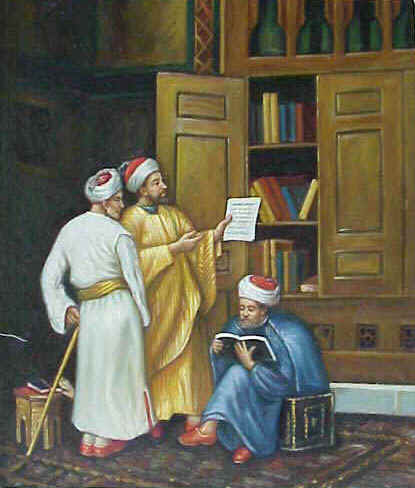
The Umayyad Caliph Umar ibn Abd al-Aziz assigned Qasim ibn Muhammad, one of the leading figures of the tabiun (the generation after the Companions), to collect all the hadiths and other narrations belonging to his aunt Aisha that he knew. On one occasion, he also wrote a letter to the Governor of Medina, Abu Bakr ibn Muhammad ibn Amr ibn Hazm, saying: “Investigate and write down the hadiths and sunnas of our master Rasulullah, and the narrations of your aunt Amra bint Abd al-Rahman al-Ansari and Qasim ibn Muhammad! For I fear that knowledge will disappear and that scholars will perish.” Both were students of Aisha bint Abu Bakr and those who knew best the hadiths she narrated. The Caliph wrote similar instructions to other walis as well. He assigned the task of classifying these hadiths to the Syrian scholar Zuhri. Zuhri worked so intensely that his wife would say, “I am content that he should take three more co-wives. At least then I would know that one day he is with me.” The lifespan of Imam Zuhri was not sufficient to complete the work, but those who came after him continued along the path he had opened. In the following period, more systematic works were produced. Of these, six known as Kutub al-Sittah are very famous. Bukhari and Muslim are among them”.
Önceki Yazılar
-
POLITICAL POWER AND ITS INNER CIRCLES THROUGHOUT HISTORY21.10.2026
-
THE LAST EMPEROR’S SORROWFUL DAYS IN SAN REMO14.10.2026
-
WHO WAS THE OTTOMAN JUDGE?7.10.2026
-
“IF YOU REALIZE THAT YOU ARE WRONG, DO NOT HESITATE TO RETURN TO WHAT IS RIGHT!”30.09.2026
-
HE WAS TO BECOME SULTAN, YET HE DOES NOT EVEN HAVE A GRAVE: PRINCE ORHAN EFENDI23.09.2026
-
IS IMPRISONMENT A PUNISHMENT FOR THE CONVICT, OR FOR HIS INNOCENT FAMILY?16.09.2026
-
ABORTION AND INDUCED MISCARRIAGE IN HISTORY9.09.2026
-
EUROPE SHOULD LEARN TOLERANCE FROM THE EAST2.09.2026
-
A SULTAN IN THE GRIP OF THE MASONS: MURAD V26.08.2026
-
AN ANCIENT GREEK TRADITION AMONG CHRISTIANS: THE BETTER THE DOWRY, THE BETTER THE HUSBAND19.08.2026