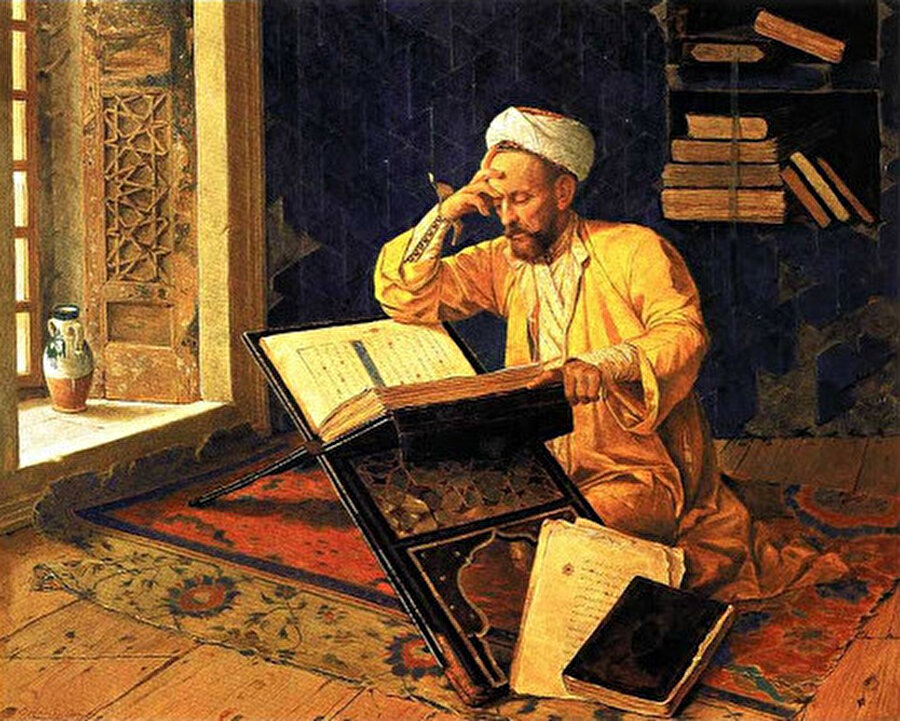
SIYASATNAMAS: THE FORGOTTEN SCHOOLS OF POLITICS
In the Eastern world, siyasatnamas (books of politics) written by experienced statesmen and scholars showed the ways of good state administration. In times when there was no school for politics, rulers considered it important to heed these recommendations.
The most common academic term defining this genre in Western literatüre is “Mirrors for Princes”. It covers works that teach rulers about justice, governance, and morality. The title of “Book of Government” is frequently used in specific book translations of Nizam al-Mulk's famous work Siyasatnama into English.
Siyasah comes from the same root as seyis (horse keeper) in Arabic. The management of horses must have been so difficult that the same name was also given to the administration of the state.
During times when fabricated etymologies were popular in Türkiye, people believed the absurd claim that the word siyasat actually came from seyasa, meaning “three laws,” formed from the Persian se (three) and the Mongolian yasagh (law), expressing legislation, execution, and judiciary; one of the ideologues of that time even wrote a book called Acun Siyasasi (World Politics).
Europeans call politics politika. It comes from the word polis (city), which in Ancient Greek was also used for the state. Politikos is the art of governing the state.
By combining poli (many) and tik (face mark), some people have also given it the meaning of “many-facedness,” which, although incorrect, does not fail to correspond rather fittingly with reality.
The Highest of Sciences: Politics
Although politics is a science, it has no school. Like raising children, it is learned through experience. There are many who lose it from their hands just when they have fully learned this art. Politics has been seen as necessary not only for governing the state but also for getting along with people and managing a household. For this reason it has been said: “The highest of sciences is tafsir (Quranic exegesis). Higher than this is the science of politics (ilm al-siyasat). Whoever does not know this cannot attain his desire.”
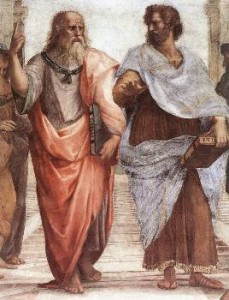
For this reason, throughout history philosophers, scholars, and even experienced statesmen have not refrained from writing works containing advice for those engaged in politics. The works on politics by Plato and Aristotle—especially Plato’s Statesman and Aristotle’s Politics—are very famous. In China in the 6th century BC, Confucius took the lead; in Iran in the 1st century BC, Bidpay did so. In Iran such works are called pendnameh. Pend means advice in Persian. The famous Kalila wa Dimna of Bidpai (Pilpay) was translated into Arabic in the 8th century by Ibn al-Muqaffa, the palace chamberlain of the Abbasid Caliph Mansur.
As understood from the name siyasatnama, under Persian influence this tradition also continued in the Islamic world. The advice written by the Prophet Muhammad (peace be upon him), followed by the caliphs ‘Umar and Ali, to governors are the earliest examples of this.
Later, scholars presented to statesmen the works they wrote about how good state administration should be. These give detailed information about the existing state organization, legal life, and social structure.
They also courageously point out the disorders and deformations in the structure of the state and society. The expressions are supported with ayat (verses of the Quran) and hadiths (sayings of the Prophet Muhammad), and examples are given from historical events.
What Can Be Said Against the Truth?
As early as the 9th century, the work titled Suluk al-Malik fi Tadbir al-Mamalik (The path a ruler should follow in administering the state), written by Abi al-Rabi' at the request of the Abbasid Caliph Mutasim, is among the earliest examples of this genre. The work al-Madinat al-Fadila by Farabi, who lived in the same period, explains how an ideal state should be. Centuries later it became a source of inspiration for the famous work Utopia by the English statesman Thomas More.
In the 11th century, Mawardi’s al-Ahkam al-Sultaniyya and Keikavus’s Qabus-nama played a very positive role in restraining the despotic rulers of the time. Imam Ghazali devoted a long section to politics in his book Kimiya-yi Sa'adat (The Alchemy of Happiness). In the 12th century, the works Nahj al-Suluk by Suhrawardi and Nahj al-Masluk by Shayzari gained great fame.
The Turks also did not remain behind their Arab coreligionists in this matter. In the 10th century the work Kutadgu Bilig by Yusuf Khass Hajib, and in the 11th century the work Siyasatnama by the Seljuk vizier Nizam al-Mulk, became well known. Kalila wa Dimna and Qabus-nama were translated into Turkish in the 14th century and presented to the sultans of the time. Kitab-i Mirat al-Muluk, written by Hüsameddin Efendi of Amasya at the request of Sultan Mehmed I, is the first siyasatnama written among the Ottomans.
There are also the counsels of the sultans to the princes. Apart from two poetic pieces of advice attributed to Ertuğrul Ghazi and Osman Ghazi, the counsels of Sultan Murad II to his son Sultan Mehmed II, and of Sultan Selim I to his son Kanuni Sultan Suleiman I, are famous.
Every Means Permissible to Reach the Goal
The oldest European counterpart of the siyasatnama tradition belongs to the Florentine thinker Machiavelli, who lived in the 15th century. This work titled Il Principe (The Prince) was translated and read by Sultan Murad IV. Burning with the ideal of the unification of his fragmented homeland Italy, Machiavelli presents politics as a science purified from morality and religion. He is even regarded as the father of the term Machiavellianism, which expresses the idea that every means is permissible in order to reach the goal.
Siyasatnama works, however, see the establishment of the affairs of rulers upon a strong moral foundation as the fundamental principle of politics. They say that success in governing a country cannot be achieved without establishing such a foundation. They present justice as the foundation of the state. Eastern rulers, even if only to preserve their sovereignty by keeping the subjects satisfied, have always attached importance to the advice of experienced statesmen and scholars. The truth is rarely welcome, yet rulers preferred to listen to words honestly spoken to them.
.jpg)
Unfortunately, in the faculties in Türkiye that claim to teach the science of politics, neither are siyasatnama works mentioned nor is the Islamic and Ottoman political tradition explained. Politicians grow up unaware of these. Europeans think that every good thing was born in Greece, developed in Rome, and reached perfection in Europe; they ignore the rest of the world. In third world countries, this idea is adopted blindly.
An Anecdote from the Siyasatnamas
Shahpur, the Persian king, had the outer columns of his palace made of gold. This caused the glory of the ruler to increase in the eyes of the people and the enemies. When Shahpur died and his son came to power, he wanted to melt these columns, which he regarded as waste. However, when they were about to be melted, it was seen that the inside of the columns was filled with sand. When the secret of the columns spread, the ruler fell out of favor with the people. It encouraged his enemies to attack him. Thus it is understood that the power of the state and the glory of the ruler increase with the treasury.
Önceki Yazılar
-
POLITICAL POWER AND ITS INNER CIRCLES THROUGHOUT HISTORY21.10.2026
-
THE LAST EMPEROR’S SORROWFUL DAYS IN SAN REMO14.10.2026
-
WHO WAS THE OTTOMAN JUDGE?7.10.2026
-
“IF YOU REALIZE THAT YOU ARE WRONG, DO NOT HESITATE TO RETURN TO WHAT IS RIGHT!”30.09.2026
-
HE WAS TO BECOME SULTAN, YET HE DOES NOT EVEN HAVE A GRAVE: PRINCE ORHAN EFENDI23.09.2026
-
IS IMPRISONMENT A PUNISHMENT FOR THE CONVICT, OR FOR HIS INNOCENT FAMILY?16.09.2026
-
ABORTION AND INDUCED MISCARRIAGE IN HISTORY9.09.2026
-
EUROPE SHOULD LEARN TOLERANCE FROM THE EAST2.09.2026
-
A SULTAN IN THE GRIP OF THE MASONS: MURAD V26.08.2026
-
AN ANCIENT GREEK TRADITION AMONG CHRISTIANS: THE BETTER THE DOWRY, THE BETTER THE HUSBAND19.08.2026