.jpg)
AN OTTOMAN PRINCE IN THE DESERTS OF LIBYA
When Libya was occupied by the Italians in 1911, among the volunteers who went there to fight was also a 16-year-old Ottoman prince: Osman Fuad Efendi. The end of this prince, who had won the hearts of the Libyans, is a sorrowful one.
Prince Osman Fuad Efendi was the younger son of Mehmed Salahaddin Efendi. He lived in Çırağan Palace together with his grandfather Sultan Murad V and his father. He first received a private education. At the age of 16, he went to Libya as a volunteer. He took part in the Cyrenaica campaign. There he met Captain Mustafa Kemal.
Upon his return, he entered the Military Academy (Harbiye Mektebi). While studying at the academy, he went to the Carlsbad Thermal Springs for three months. On this occasion he traveled around Europe. In 1914 he graduated from the Military Academy with the rank of second lieutenant. In 1914 he became first lieutenant, and in 1916 he became a captain.
Together with Prince Abdurrahim and Abdulhalim Efendi, he was sent to Germany for education. He studied at the Berlin Military Academy. He carried out an internship in the imperial hussar (cavalry) regiment in Potsdam. The three princes visited the Kaiser’s headquarters in Berlin on 12 November 1914. The Kaiser presented each of the princes with a decoration.
.jpg)
An Unforeseen Accident
During the war he was called back to the homeland at the beginning of 1916. While returning, the submarine he boarded was struck and damaged at Kiel by English submarines. Since radar had not yet been invented, while traveling on the surface there were a few lookout posts on the deck. When there was a danger, the officer on duty would press the alarm horn and the submarine would dive. Whoever was on the deck would hurriedly descend into the body of the vessel. The watertight hatches would immediately be closed.
Since the inside was airless, everyone wanted to go up to the deck. On one occasion Osman Fuad Efendi was on the deck when the alarm was sounded. But he was unfamiliar with warships. When the alarm was given, he acted slowly. He became the last person to reach the ladder descending into the body of the vessel. As he descended slowly and hesitantly, the heavy watertight hatch came down violently on his head. They immediately entered Pola, an Austrian port on the Adriatic coast. At the Naval Forces Hospital it was understood that Fuad Efendi’s skull had been fractured. He was immediately operated on.
Meeting with Mustafa Kemal
After recovering, he went to Libya for the second time. He worked in the retinue of Nuri Killigil, the brother of Enver Pasha. On 29 July 1916 he was appointed as an aide-de-camp to the Padishah and became deputy commander of the Imperial Retinue (maiyyet-i seniyye) Cavalry Squadron, which appeared in ceremonies.
On 4 January 1917 he visited the Galicia front together with Abdurrahim Efendi. On 22 April 1917 he was appointed to the 2nd Caucasian Cavalry Brigade attached to the 3rd Army, to be employed in a suitable company command. However, he had this assignment canceled and on 29 April 1917 he was appointed to the command of the 3rd Cavalry Division of the 6th Army in Jordan.
At one point he made an inspection journey to Suez. When his wound reopened there, he came to Aleppo for treatment. Mustafa Kemal Pasha, whom he knew from Tripoli, welcomed him. They stayed at the Baron Hotel, which still exists today.
Meanwhile he took part in some diplomatic missions. In September 1917 he went to Bulgaria to attend the funeral ceremony of the queen mother who had died. On 24 October 1917 he went to Vienna to present the Order of the Ottoman Dynasty to the new Austrian Kaiser Karl I.
The Libya Adventure
In addition to his personal merits such as theoretical and practical knowledge of warfare, good command of foreign languages, and having traveled abroad, the fact that he was the grandson of Sultan Murad V placed him in a more favorable position in the eyes of the Young Turks. Consequently, on 2 April 1918 he was appointed Commander of the Africa Armies Group in Tripoli with the honorary rank of Ferik (full general).
Although the Treaty of Ouchy had been signed in 1911 and the defense of Libya had been abandoned, the resistance of the local mujahids (Muslim resistance fighters) continued and the Ottoman government had not abandoned supporting them. Retaining Libya, where the Italians could not establish full control outside the coast, was important in terms of the fate of the war because of its strategic position in the Mediterranean. Indeed, Ahmed Djemal Pasha would also attempt to capture Egypt by attacking the Canal from Syria. The forces in Libya would pressure the British from the rear.
Nuri Killigil, the brother of Enver Pasha, who was familiar with the region, came to Libya with 10,000 gold coins and met Sheikh Ahmed as-Senussi, who was at the head of the resistance. He tried to persuade him to attack Egypt but was not successful. Because the British had promised him independence.
Thereupon, an infantry battalion composed of three infantry companies and a heavy machine-gun detachment was sent to Derna on 17 May 1915. A force consisting of 9 infantry battalions and a lines-of-communication command was assembled. It was named the Africa Groups Command. The units under the command of Nuri Killigil attacked Egypt in February 1916 but suffered defeat. However, if this attack had been made against the Italians, Libya might have been saved. Nevertheless, this operation benefited Germany. For this reason the British could not dispatch their forces in Africa elsewhere. The African Army continued its struggle toward the west. When Nuri Killigil was sent to the Caucasus, the 23-year-old cavalry captain Osman Fuad Efendi was appointed in his place. It was hoped that the people would show respect and esteem to this grandson of the Caliph and gather around him.
And Disappointment
Fuad Efendi continued the resistance for several months at his headquarters in the city of Misrata. However, this army, composed of between 300 and 500 Ottoman officers and soldiers and between 15,000 and 30,000 Libyan volunteers, could not withstand the well-equipped Italian army of 60,000 men. The Benghazi wing had already surrendered in April 1917.
Mustafa Kemal Pasha, whom he had met in Istanbul at the Pera Palace before going to Libya, had advised him that when he went to Tripoli, he should declare his independence and not obey the orders given by the Ministry of War (Harbiye Nezareti). However, when the German submarines that supplied them with provisions and ammunition could no longer go to sea due to the armistice, he was left in a very difficult situation. On 24 October 1918 he wanted to return because of illness, but no answer came from Istanbul. For the government had fallen and Enver Pasha had fled.
Although two imperial decrees (padishah iradesi) ordering him to surrender immediately arrived one after the other in accordance with the Armistice of Mudros signed on 30 October 1918, the prince did not pay attention. He and his retinue came to Urfelle and from there to Tarhuna. Here a third decree ordering him to surrender to the Italians was delivered by Captain Ekrem Bey, the son of Governor Receb Pasha. The prince left the duty of command to one of the local resistance leaders, Abdulqadir Pasha, and went to Gharyan.
The Great March
Rather than fall into the hands of the Italians and be shot with the accusation of being a war criminal, he preferred to surrender to the French in Tunisia. Who knows, perhaps he feared a fate similar to that of his great-uncle Cem Sultan. At one point he even thought of crossing the Sahara and surrendering to the Spaniards in the Gulf of Guinea, but when those with him said that this was not a good idea, he gave it up. His real aim was to find a way to reach Istanbul.
First he dispersed the volunteers who were with him. Then, together with the Ottoman forces at his side, he moved away from the Italian lines with camels and plunged into the southern desert. Later he continued his journey toward the west. At the same time he was suffering from dysentery.
When they reached the Tunisian border, he said that he wished to surrender to the French and set the condition that he should not be handed over to the Italians. The French accepted this. On 8 March 1919 he arrived at Duheibat in Tunisia. After staying there for 12 days, he passed to Medenine. He stayed there for 5 days as well. On March 25 he arrived in Tripoli. On 30 May 1919 the French handed him over to the Italians together with those who were with him.
Captivity
The Italians transferred the prisoners to Tripoli and distributed them among prisoner-of-war camps where German soldiers were held; the prince, whom they hesitated to execute by firing squad, was confined on a military transport ship. In the letter he wrote from there to the Padishah dated 30 April, he stated that the Italians were treating him well; however, because of the difficulties he had faced until now his nerves had deteriorated and he had developed neurasthenia; and that he was distressed because he could not receive news from Istanbul or from his family.
On the ship he was forbidden to go up on deck, to walk about, or to communicate. He and those with him became extremely bored. In fact, upon hearing the news of the Greek occupation of İzmir, his aide Şerefeddin Bey suffered a nervous breakdown and threw himself into the water, but he was rescued and sent to a prisoner-of-war camp in Tripoli. The others were transferred to the Tobruk Yacht of the Governor of Tripoli, Receb Pasha. A comparatively comfortable life had begun for the prisoners.
The prince and his retinue spent three months on this yacht. Upon the pressure of the Libyan mujahids, the Italian government agreed to release them in exchange for Italian soldiers who had been in their hands for seven years. On 2 June 1919 the prince and his retinue were taken with the Tobruk Yacht to Naples and anchored at the island of Ischia offshore. But they were no longer treated as prisoners; they could move about comfortably like tourists and could establish contact with civilians. After a while the Turkish prisoners in Gharyan also came to join them.
Liberation
At last he was released and returned from Naples by train to Brindisi and from there by ship to Istanbul. 7 October 1919 he arrived at the Ottoman capital. The Istanbul newspapers gave the news as a headline. As soon as he arrived he was received by the Padishah. On 11 November 1919 he was appointed to the Istanbul Central Command with the rank of major.
On 2 February 1920 he married Kerime Hanimefendi, the daughter of Abbas Halim Pasha. İsmet İnönü, whom he had hosted for months in his palace during the armistice period, also attended the wedding in Çırağan Palace. Although in 1924 Mustafa Kemal wished only a few of the older princes to be exiled, it is said that the prime minister of the time, İsmet İnönü, who insisted on the exile of all members of the dynasty, men and women alike, felt such hatred toward the dynasty because of an inferiority complex dating from those days.
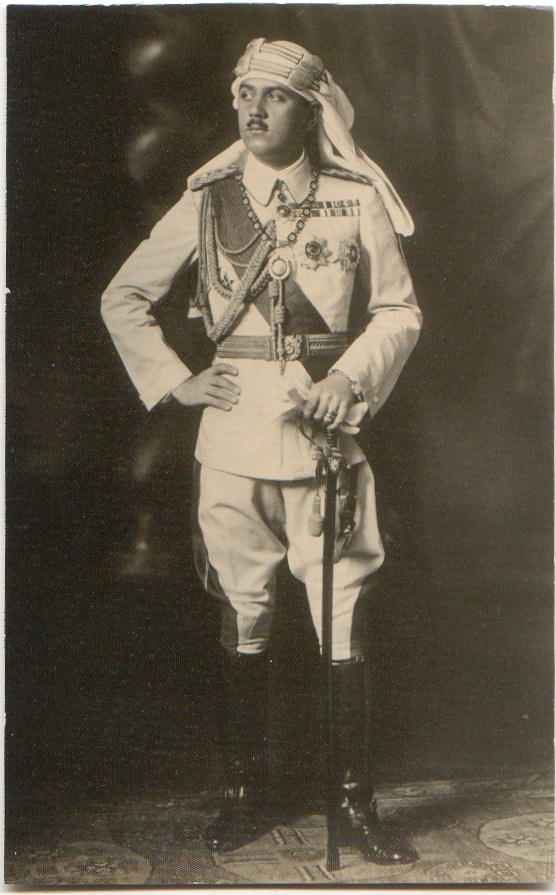
I Could Not Make an Exception!
In 1921, when the Ankara movement adopted a stance against Istanbul, he went to Rome with his wife. On 28 March 1922 he was warned to return to the country together with the other members of the dynasty abroad, and he returned. However, after the abolition of the sultanate and the exile of Sultan Mehmed VI, he went to Rome again. When the dynasty was exiled on 3 March 1924, he was in Carlsbad undergoing a six-month thermal cure.
Meanwhile he received a letter from Mustafa Kemal Pasha via a military courier. It said: “I am very sorry. I could not make an exception for your remaining outside the motherland. The law was general.” Thereupon the prince sent a message through the ambassador saying, “If Mustafa Kemal Pasha wishes, I will come to Anatolia,” but no result came of it. Yet at that time all governmental power was in the hands of the Mustafa Kemal; if he had wished, he could easily have made this exception.
He went to Cairo. Afterwards he always lived in France. He separated from his wife, because the temperament of the prince did not match that of Princess Kerime, who possessed a dignified character. Nevertheless, the members of the family continued their relations with the princess. The prince was sent money by Nilüfer Hanımsultan, the daughter of his sister Adile Sultan who was married to the son of the Nizam of Hyderabad, and by the Egyptian Prince Yusuf Kemal. Except for travels, his life passed in hotel rooms that were sometimes luxurious and sometimes shabby. His personal belongings remained scattered here and there.
Medals Do Not Fill the Stomach
The German Field Marshal Rommel examined the prince’s operations in the Libya campaign and imitated his desert warfare methods. At that time Fuad Efendi was in Alexandria. During the Second World War the British offered him the rank of colonel and full authority to conduct commando warfare against the Germans in Libya. Because the prince was still very popular in Libya and the people were still attached to him. However, he refused because he did not wish to fight against his former comrades-in-arms.
Fuad Efendi, who was a social person, served as the president of the Fenerbahçe Sports Club for two terms between 1911 and 1912. Like all members of the family, he was musical. Unlike his elder brother Ahmed Nihad Efendi, he had a modern lifestyle. During his princely days he rode horses well; he would travel in an open-top Mercedes automobile; he dressed elegantly and enjoyed entertainment. He was a popular and beloved prince. He was handsome and filled the position he held with dignity. Because of his excessively generous and life-loving nature, he suffered great financial hardship in exile. Besides the many decorations and medals that filled the chest of his uniform, he was also the holder of the Legion d’Honneur. He would joke by saying, “Medals do not fill the stomach.”
General De Gaulle, with whom he had established a personal friendship during the war, gave him a diplomatic passport. He traveled with official or unofficial status. After the death of his elder brother Nihad Efendi, he became the head of the dynasty in 1954. If the sultanate had continued, he would have been the 39th Padishah. He died in Nice in 1973 at the age of 78. He was buried in the Muslim cemetery of Bobigny in Paris. His life in exile lasted 49 years, beginning when he left as a 29-year-old officer.
Is This What We Deserve?
Three years before his death in Paris, he made poignant statements to the Hürriyet newspaper reporter Doğan Uluç, who came to interview him in a hotel room containing nothing but a bed, a cracked porcelain washbasin, and two chairs, beautifully summarizing what the dynasty had experienced in exile:
“Who could have imagined that we would fall into such a state, my child? That Ferik (full general) Prince Osman Fuad, the commander of the Ottoman army in Tripoli and the commander of Istanbul Central Command, would one day be expelled from a third-class hotel in Paris… What we were, and what we have become! We can no longer set foot on the lands where our ancestors wielded the sword and ruled, lands filled with our sweet and bitter memories. Is this what we deserve? It is truly a great pity for the Ottomans who live outside the motherland in various countries as refugee supplicants… Some cannot endure the misery and commit suicide; others give their last breath while deliriously murmuring ‘Türkiye, Türkiye.’ And the children born abroad grow up like foreigners, unable to learn Turkish in foreign schools, unable to know our history and our religion. It has been a very cruel end for us. After the last remnants of the dynasty depart, the pages of history will say that once there was an Ottoman family… My request to you is that after I am gone, you publish a photograph of me in your newspaper. Beneath it, simply write ‘Osman Fuad’. Perhaps someone will remember.”
Indeed, the prince died without seeing the lifting of the exile imposed on the Ottoman dynasty.
Önceki Yazılar
-
POLITICAL POWER AND ITS INNER CIRCLES THROUGHOUT HISTORY21.10.2026
-
THE LAST EMPEROR’S SORROWFUL DAYS IN SAN REMO14.10.2026
-
WHO WAS THE OTTOMAN JUDGE?7.10.2026
-
“IF YOU REALIZE THAT YOU ARE WRONG, DO NOT HESITATE TO RETURN TO WHAT IS RIGHT!”30.09.2026
-
HE WAS TO BECOME SULTAN, YET HE DOES NOT EVEN HAVE A GRAVE: PRINCE ORHAN EFENDI23.09.2026
-
IS IMPRISONMENT A PUNISHMENT FOR THE CONVICT, OR FOR HIS INNOCENT FAMILY?16.09.2026
-
ABORTION AND INDUCED MISCARRIAGE IN HISTORY9.09.2026
-
EUROPE SHOULD LEARN TOLERANCE FROM THE EAST2.09.2026
-
A SULTAN IN THE GRIP OF THE MASONS: MURAD V26.08.2026
-
AN ANCIENT GREEK TRADITION AMONG CHRISTIANS: THE BETTER THE DOWRY, THE BETTER THE HUSBAND19.08.2026