.jpeg)
“IF YOU REALIZE THAT YOU ARE WRONG, DO NOT HESITATE TO RETURN TO WHAT IS RIGHT!”
Caliph Umar ibn al-Khattab said this in a letter he wrote to the Qadi (judge) of Kufa. For this reason, in Islamic history, if it was understood that there was an error in a court decision, the case would be reconsidered and a new ruling would be issued.
Once upon a time in Europe, while nobles or ordinary officials appointed by the king heard cases, in the Islamic Empire, legal scholars served as judges. Judges were granted freedom of ijtihad (legal interpretation); a ruling based on one ijtihad could not be overturned by another. A judge would hear the case brought before him and issue a ruling according to his own ijtihad; if he was not a mujtahid (Islamic scholar capable of independent legal reasoning), according to his school of law. Even the ruler could not overturn a properly issued judgment. If the parties believed that the judge had issued a ruling contrary to the law, they could take the decision to another judge. If the decision was indeed contrary to the law, it would be overturned and a new ruling would be issued.
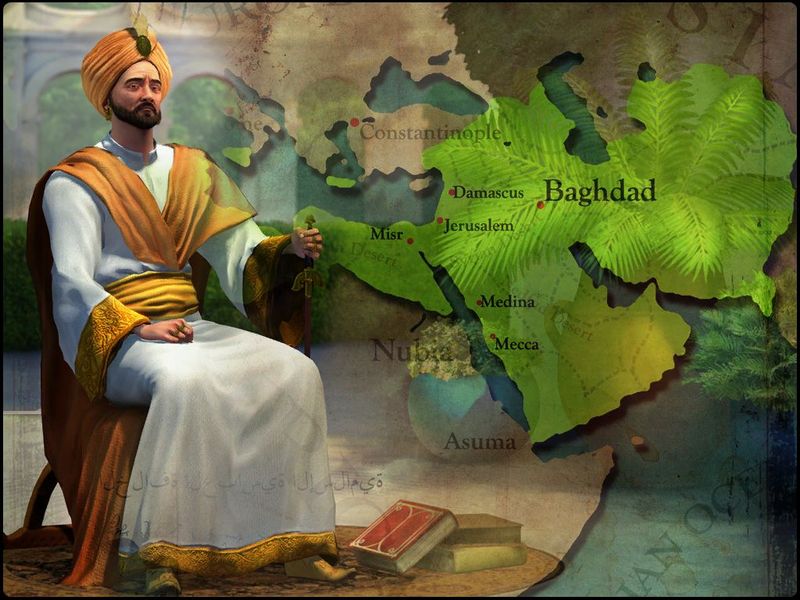
The Caliph's Signature on Qisas
The Prophet Muhammad would hear the cases of those who objected to the judgments of the judges he had appointed and would correct them if the judgment was wrong. The party that lost a case heard by Amr ibn al-As appealed to the Prophet, who upheld Amr's judgment. In Yemen, people from various tribes dug a pit and waited beside it in order to hunt a lion. One of them fell into the pit. Another person, stumbling over him, fell in, and then two more people fell into the pit in the same way; the lion tore them apart. Thereupon, the tribes of those who died subsequently demanded the blood money for three people from the tribe of the first person to fall into the pit. They, however, agreed to pay only the blood money for the person who had stumbled over the first one. The Qadi of Yemen, Ali ibn Abi Talib, ruled that the first person to fall was entitled to one-quarter of the blood money, because three more people perished after stumbling over him; the second was entitled to one-third, because two more people perished after stumbling over him; the third was entitled to one-half, because one more person perished after stumbling over him; and the last person to fall was entitled to the full blood money, because no one perished because of him. Those who were not satisfied with the judgment presented the matter to the Prophet Muhammad during the pilgrimage season. He upheld the judgment.
The Rightly Guided Caliphs (Khulafa al-Rashidun) acted in the same way. Caliph Umar would establish a divan (official council) in Mecca every pilgrimage season and review the judgments of the judges there. In a letter he sent to Abu Musa al-Ashari, the Qadi of Kufa, he wrote, “If, after issuing a judgment, you realize that it is wrong, do not hesitate to return to what is right!” He also prohibited the execution of death sentences handed down by judges without his own approval. Since then, in the Islamic world, qisas (retaliation in kind) cannot be carried out without the ruler's signature.
Even when their ijtihad differed, the caliphs would not overturn the judgments given by the qadis, or even by previous caliphs. Following a complaint by a party convicted by a judgment given by Qadi Abu al-Darda, Caliph Umar said, “If I were in his place, I would have ruled in your favor.” When he was asked, “What prevents you from doing so?” he replied, “There is no verse or hadith on this matter. And one ijtihad has no superiority over another!” A matter concerning the removal of an irrigation dam in the middle of a piece of land jointly owned by Ali ibn Abi Talib and Talha ibn Ubaidullah was brought before Caliph Uthman. However, when he learned that Caliph Umar had previously heard the case and ruled in Talha's favor, he withdrew from the case. Talha then gave his share to Ali as a gift.
A man who had set out on a journey and failed to return while his companions had returned came before Qadi Shurayh, as his relatives claimed that he had been killed by his companions. Since they could not produce evidence, he asked the suspects to swear an oath that they were innocent. After they swore the oath, he dismissed the case. The plaintiffs later took the case to Caliph Ali. He listened to the suspects separately and, based on the inconsistencies in their statements, overturned the judgment and ruled against them. Thereupon, the suspects confessed their crime.
A man bought a slave from the dar al-harb (territory not under Islamic rule). Later, the previous owner appeared and asked for his slave back on condition that he pay his value, but Ibn Khulayda, the Qadi of Kufa, found him to be in the wrong. The opposing party took the matter to the next qadi, Shurayh. He then issued a new ruling to the contrary, saying, “According to the Sunnah of the Prophet, if property belonging to a person is seized by the enemy and taken to the dar al-harb, and a Muslim later comes into possession of it, the first owner has the right to reclaim the property by paying its value.”
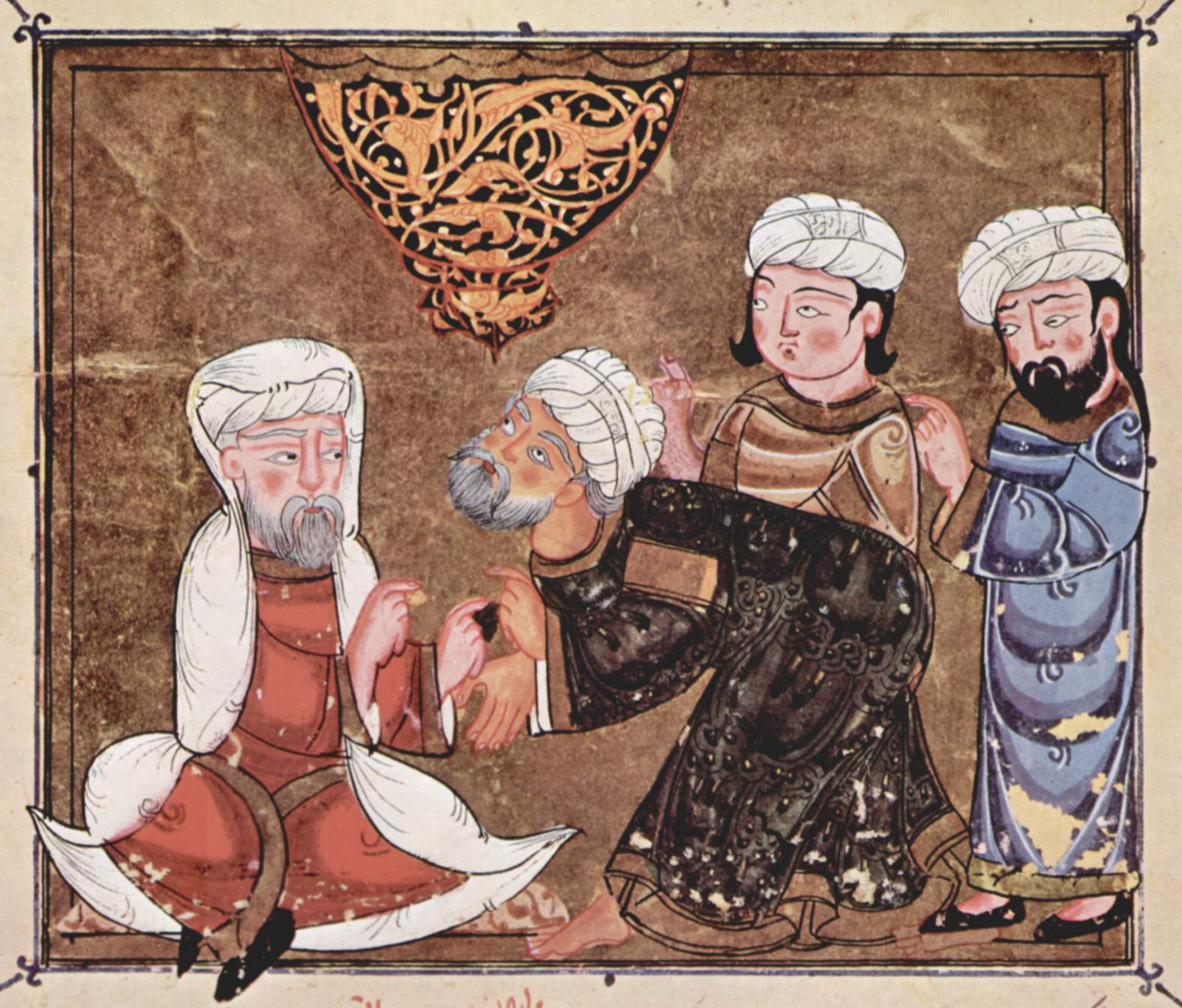
A Subtle Tactic
A judge may return to a judgment he has issued in a case and adopt a judgment that he later considers better. According to what is related in the Quran al-karim, one night a flock of sheep entered a vineyard and caused damage. The person who suffered the damage came before the Prophet Dawud (David) brought a claim. He ruled that the sheep be given to the person who had suffered the damage as compensation.The Prophet Sulayman (Solomon), however, ruled that the sheep should be handed over to the injured party, who would benefit from their produce until the vineyard had grown again; once the vineyard had recovered, the sheep would be returned to their owner. The Prophet Dawud approved his son's judgment. The Quran al-karim praises the knowledge and understanding of both of them. The great scholar of tafsir, Qurtubi, says: “If this verse had not existed, the qadis would have perished.”
There is another similar incident: One evening, while two women were walking along the road with a boy each who closely resembled one another, a wolf seized one of the children. The women disagreed over whom the remaining child belonged to. The Prophet Dawud decided that the child belonged to the older woman. The Prophet Sulayman took a knife in his hand and ruled that the child be divided into two equal parts and distributed between the women. In response to the older woman's silence, the younger woman showed great distress, saying, “Please do not do that; let the child belong to the older woman!” The Prophet Sulayman, thinking that such a compassionate reaction could only come from the real mother, gave the child to the younger woman. The Prophet Dawud accepted his son's judgment.
When Fatima bint Qays was widowed, the Prophet Muhammad ruled that she should observe her iddah (waiting period) at the house of Umm Sharik. But taking into consideration that many people came and went there, he changed his ruling and directed her to observe it at the house of her cousin, Abdullah ibn Umm Maktum. These incidents were taken as evidence for istinaf, that is, the reconsideration of a case when necessary. But this requires the ruler's permission. Otherwise, matters become prolonged and chaos ensues.
Önceki Yazılar
-
IS IMPRISONMENT A PUNISHMENT FOR THE CONVICT, OR FOR HIS INNOCENT FAMILY?16.09.2026
-
ABORTION AND INDUCED MISCARRIAGE IN HISTORY9.09.2026
-
EUROPE SHOULD LEARN TOLERANCE FROM THE EAST2.09.2026
-
A SULTAN IN THE GRIP OF THE MASONS: MURAD V26.08.2026
-
AN ANCIENT GREEK TRADITION AMONG CHRISTIANS: THE BETTER THE DOWRY, THE BETTER THE HUSBAND19.08.2026
-
WHY DID THE PROPHET MUHAMMAD MARRY MULTIPLE TIMES? Understanding the Prophet Muhammad’s Marital Life12.08.2026
-
HOLY RELICS ADORNING ISTANBUL5.08.2026
-
AN OTTOMAN PRINCE IN THE DESERTS OF LIBYA29.07.2026
-
THE TURKS AT THE GATES OF VIENNA22.07.2026
-
THE SOLE FEMALE RULER OF TURKISH-ISLAMIC HISTORY15.07.2026