.jpg)
THE LAST EMPEROR’S SORROWFUL DAYS IN SAN REMO
A few years ago, I happened to visit San Remo. Many people know San Remo, a small and charming Mediterranean city on the Italian Riviera, for a music festival held there. Yet this is a city where some of the most painful pages of Turkish history unfolded. Sultan Mehmed VI Vahideddin spent the final days of his life here; he died here.

San Remo is a small and charming Mediterranean city on the Italian Riviera. Its character as a resort town, with its greenery and beautiful sea, stands out. In the past, during political upheavals in Europe, it also became a refuge for many nobles who were forced to leave their countries. Among these sorrowful guests were two rulers of the East: Shah Muhammad Ali Qajar of Iran and the Last Ottoman Emperor Sultan Mehmed VI Vahideddin. Both spent their final days in this city. Both breathed their last here. In a sense, San Remo is the final page of an era in Ottoman and Iranian history.
.jpg)
Upon learning that he had been accused of treason against the homeland in the assembly in Ankara on 17 November 1922, Sultan Mehmed VI left Istanbul with his ten-year-old son Ertugrul Efendi and his nine loyal attendants and went to Malta. He was able to stay here for only a month or two. Following an invitation from Sharif Husayn Pasha of Mecca, he went to the Hejaz to perform the pilgrimage. He stayed in Taif for 12 days. He contracted a fever. He wanted to settle in Palestine, but Britain, which had reached an agreement with Ankara and no longer wished to experience trouble because of this guest, refused to grant permission. It was here that the Sultan published his famous declaration responding to the accusations against him.

The ship on which the Sultan was traveling left the Hejaz and anchored off Alexandria. He wanted to settle in Egypt. But King Fuad, who had long harbored hostility toward the Ottoman dynasty, showed no interest. While the Sultan was in despair, the Italian consul in Alexandria visited him aboard the ship and conveyed the greetings of the King of Italy. The King was inviting the Sultan to his country and undertook to let him reside in whichever palace he wished and to pay him a monthly allowance. The Sultan accepted the invitation; however, he rejected the offer of a palace and an allowance, saying, “If the caliph of the Muslims receives assistance from a Christian ruler, this would offend the Muslims.”
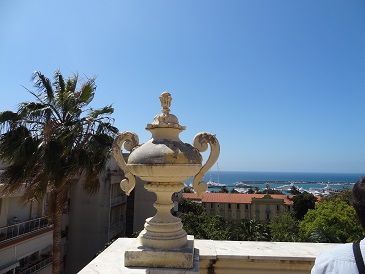
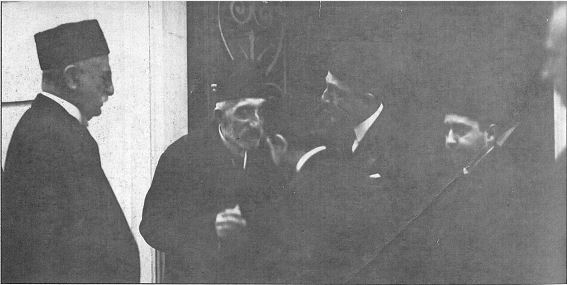
King Vittorio Emanuele, while still Crown Prince, had come to Istanbul; Vahideddin Efendi, who was then a prince, had been assigned to accompany him, and a friendship had developed between the two. Just at that time, the Italian prince received news of his father’s death and returned to his country as king. It was a Christian king who was destined to show loyalty to the Sultan. The King and Prime Minister Mussolini received the Sultan at the port of Genoa. He then traveled by train to San Remo, the coastal city of Italy near the French border, and settled there. Its climate was mild, and it was also close to his sister Mediha Sultan, who was in France. The Shah of Iran was also in exile here. The Shah, who had once recognized the Sultan as caliph and asked for the hand of his daughter Sabiha Sultan, but whose proposal had been rejected, died in San Remo. Sultan Mehmed VI attended the funeral of his counterpart, who shared the same fate. Interestingly, the Shah’s funeral procession was also taken by ship to Damascus and from there to Baghdad, and he was buried in Karbala.
The King’s invitation to the Sultan to come to Italy must have been at the behest of the Italian government, one of the greatest supporters of the Ankara government and one of the founders of the Republic of Turkey. Thus, the Sultan could be kept under control and, if necessary, used as a bargaining chip.
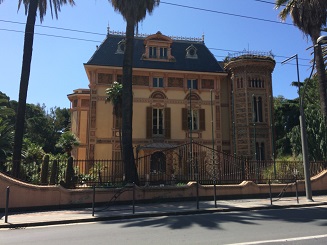
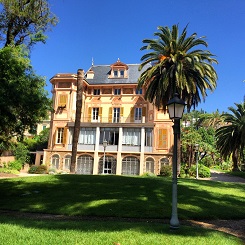
The Sultan first rented Villa Nobel on the main street. This was the home of the famous scientist Alfred Nobel. It was a modest house set in a small garden adorned with tropical trees and flowers. It still exists in its original form today and is a Nobel Museum. In this small house, the palace protocol continued exactly as before; there was no end to the people coming and going. The Sultan felt obliged to console these people who had been separated from their homeland because of him, and he gave them money. Once things settled down, he still maintained his belief that he would return to his country. He believed that his people would regret the way they had treated the heir to the legacy of Osman Ghazi and the great Ottoman sultans.
.JPG)
.JPG)
.JPG)
The Great Scandal
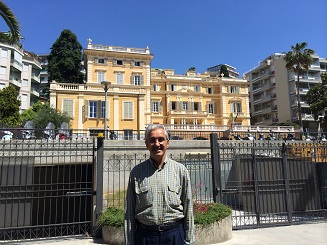
When the entire dynasty was exiled in March 1924 and his family also arrived, he completely lost hope of returning to his country. Villa Nobel was no longer large enough for the crowded household. In early summer 1925, they moved to Villa Magnolia across the road. Two gendarmes stood at the gate of the villa, which had various flowers and trees in its spacious garden and was given this name because of the scent of magnolias. The Sultan, who had grown a beard, had now withdrawn completely into seclusion. He would spend hours confiding in his sister Mediha Sultan, who had moved in with her family after the death of her husband, Damad Ferid Pasha. He had increased his smoking, which he called “my only consolation.”
The greatest curiosity of San Remo society, meanwhile, was the Sultan’s harem (the women of the Ottoman imperial household). Some foreign ladies from San Remo society would come to visit; almost all of them could not conceal their admiration for the elegance, courtesy, and culture of the women of the harem, nearly all of whom spoke French. The Italian government had issued passports to the Sultan, his family, and his aides-de-camp. The King and Prime Minister Mussolini came to San Remo at one point and met with the Sultan at the casino. Ankara, quite unnecessarily, opened a consulate in Genoa solely to keep the Sultan under surveillance. In fact, the Sultan’s physician, Reşad Pasha, had been tasked with reporting what was happening in his capacity as Ankara’s spy. So much so that he later committed suicide in San Remo out of remorse.

The Sultan lived here in great financial hardship and disappointment. All the 35,000 liras and jewelry he had taken with him were sold. The dynastic decoration was next in line for sale. When the Sultan removed its jewels and sent it to a jeweler, he experienced his greatest disappointment. These had already been removed and sold by his attendants and had been kept hidden from the Sultan so that he would not be saddened.
One rainy night in May 1926, while conversing with his family, he said, “Go and perform the Isha prayer; let us continue afterward.” When they returned, they found him dead in the armchair where he had been sitting, having suffered cardiac arrest. The heir to a mighty empire, the caliph of three hundred million Muslims, had been delivered from the troubles of this world and gone to meet his Lord.
His reaction to the Caliphate Congress convened in Cairo in May 1926, and his declaration that he himself was the sole Islamic Caliph, unsettled some people. For this reason, there is also a report that he was poisoned either by the Italians or by Ankara, which still feared the Sultan’s presence.
The body was prepared for burial by his attendants. It was placed in a coffin in the courtyard of the house. Death is a release from suffering. But what about those left behind? Where could the Sultan’s body be buried? Then, because of a debt of 60,000 lire owed to tradesmen, the Sultan’s coffin and the belongings in the house were seized by creditors. This was a great scandal.
In the Sultan’s private drawer, there were 17 quarter gold coins and a dynastic decoration from which the diamonds had been removed. This was his entire fortune.
The attendants secretly opened the coffin and, placing the body in another coffin, smuggled it out by car through the kitchen door at the back of the house. They took it to nearby Genoa and from there by ship to Beirut. After the house and the empty coffin remained under seizure for a month, the Sultan’s daughter Sabiha Sultan, who was living in the nearby city of Nice, sold her jewelry, paid the debt, and had the seizure lifted. She was also made to pay for the autopsy carried out by the Italian government. During this period, the people of San Remo stood in respect before the Sultan’s coffin.
Meanwhile, time had passed; because of the summer heat, the body had begun to decompose. Ahmed Nami Bey, one of Sultan Abdulhamid II’s former sons-in-law, was at that time the head of state of Syria, which was under French occupation. Through his intervention, the body was brought to Damascus. It was buried in the garden of the mosque built by Sultan Suleiman I in a large ceremony attended by almost the entire population of Damascus. This was also in accordance with the Sultan’s will. Later, as other deceased members of the dynasty were buried there, the place became a family cemetery. The grave of the last Sultan gives one the impression that the mighty Ottoman Empire itself was also buried there.
.jpg)


Önceki Yazılar
-
“IF YOU REALIZE THAT YOU ARE WRONG, DO NOT HESITATE TO RETURN TO WHAT IS RIGHT!”30.09.2026
-
HE WAS TO BECOME SULTAN, YET HE DOES NOT EVEN HAVE A GRAVE: PRINCE ORHAN EFENDI23.09.2026
-
IS IMPRISONMENT A PUNISHMENT FOR THE CONVICT, OR FOR HIS INNOCENT FAMILY?16.09.2026
-
ABORTION AND INDUCED MISCARRIAGE IN HISTORY9.09.2026
-
EUROPE SHOULD LEARN TOLERANCE FROM THE EAST2.09.2026
-
A SULTAN IN THE GRIP OF THE MASONS: MURAD V26.08.2026
-
AN ANCIENT GREEK TRADITION AMONG CHRISTIANS: THE BETTER THE DOWRY, THE BETTER THE HUSBAND19.08.2026
-
WHY DID THE PROPHET MUHAMMAD MARRY MULTIPLE TIMES? Understanding the Prophet Muhammad’s Marital Life12.08.2026
-
HOLY RELICS ADORNING ISTANBUL5.08.2026
-
AN OTTOMAN PRINCE IN THE DESERTS OF LIBYA29.07.2026