IF I WERE A RICH MAN!
People in Ottoman society in those days used to say, “Neither heat nor wealth does any harm.” But it is also a well-established fact that the wealthy have more troubles. Moreover, they say that an unworthy child can ruin a wealthy person. The Turkish word “zengin” (rich) comes from the Persian word “sang”, meaning stone. It means to bear a heavy burden like a stone.
The song “If I were a Rich Man” from Fiddler on the Roof is famous. Many people do not know what they would do if they became rich, or they are bewildered by the prospect. Young people believe that one can become rich easily. When they realise that this is not the case, they think that wealth can only be acquired through gambling, the stock market, smuggling, and similar means. Of course, there are people who become rich in such ways.
But wealth is attained by climbing the steps gradually through hard work, patience, and a little help from fortune. For this reason, it is good to read the memoirs of famous wealthy people. One sees that they never let a second go to waste. Nowadays, everyone wants money, not hard work... Otherwise, the rich man's wealth keeps the poor man's tongue wagging!
Compassion for Three People!
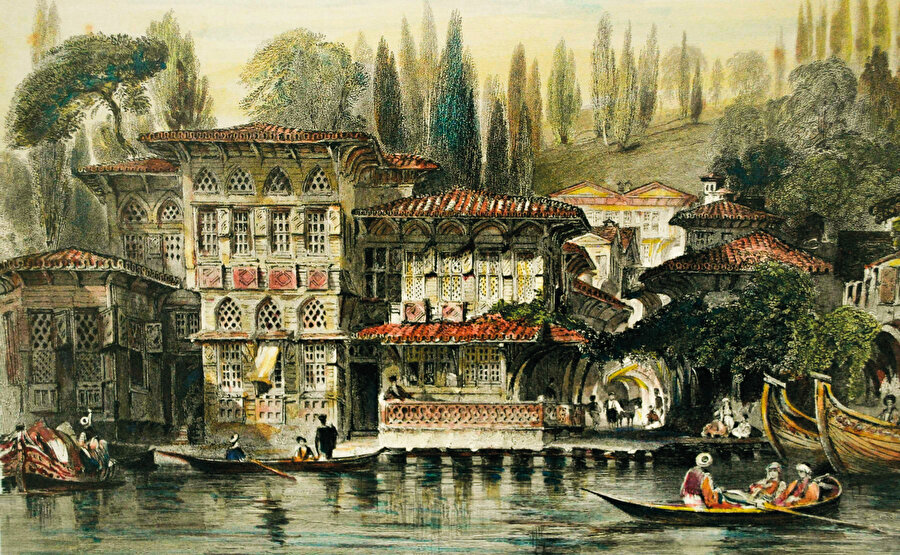
In Ottoman society, where a shortage of money was always prevalent, one would not encounter rich people in the modern sense. Those regarded as wealthy were members of distinguished families who owned vast estates and countless servants. Yet most of them might not have had five pennies in their pockets.
During the reign of Sultan Abdulhamid II, it was impossible for a peasant, with a small amount of gold capital secretly concealed in his sash or inside his clothing, to become a merchant who had acquired such standing and wealth within a few years that ministers would attend his wedding. For the world of commerce in that era was bound by traditions, while wealth required time. A self-made businessman could emerge only with great difficulty and after a very long time.
The World War I gave rise to wealthy people who amassed fortunes through profiteering. While spending a fortune they did not know how to handle, they showed no restraint in their vulgar displays of newfound wealth. Nevertheless, as the saying goes, “Easy come, easy go,” and most of them were reduced to begging in a short time.
Falling from riches into poverty is also one of life's bitterest twists of fate. The play Tovarish —performed in Türkiye under the title The Magnificent Poor Ones — deals with this subject.
The Prophet Muhammad (peace be upon him) said, “Have compassion for three people: one who was once held in high esteem but has fallen from his position, one who was once wealthy but has fallen into poverty, and a scholar living among the ignorant.”
Wealth acquired through legitimate means and spent on good causes benefits everyone. In the Quran al-karim, riches and wealth are praised (Sad: 31). Most of the prophets and their companions were wealthy. Aghniya-i Shakirin (the wealthy who give thanks) were regarded as superior to Fuqara-i Sabirin (the poor who patiently endure). For a wealthy person of sound judgement is of great benefit to society.
In the old days, the neighbourhoods of the rich and the poor were not separate. The wealthy prepared dowries for poor girls, established businesses for young men, and arranged circumcision ceremonies for poor children. They served as a kind of social insurance, helping those whose houses had burned down or whose family members were ill.

Wealth Suits You!
Refik Halid Karay (Turkish writer and journalist) relates: “Millionaire was a word that was hardly ever used in conversation. It did not even appear in Turkish dictionaries. While Sultan Abdulhamid II was still on the throne, I had asked my father: ‘How many gold coins' worth of wealth does a person regarded as very rich in our country possess?’ After making an exception for three people, he said, ‘The others are men worth at most 50,000 (gold) liras.’ This is a great fortune; indeed, one that would not easily be exhausted. It has been the lot of very few people.
The entire Ottoman nation knew who the wealthy people of earlier times were. Most of them were generous and hospitable. They fed people, clothed hundreds, and looked after the poor and needy in their neighbourhoods. These were undoubtedly more beneficial people. Most of their mansions were, on a small scale, a Darulaceze (poorhouse and hospice) and an orphanage, a dispensary for their neighbourhood, and an imarah (public soup kitchen).
Wealth came with certain obligations, manners, and rules of etiquette, which they observed. They lived in a manner befitting their status; yet, when they died, they left their children nothing more than two houses at most: one for summer and the other for winter.” (Akşam, a Turkish newspaper, 29 September 1947)
Sultan Mahmud II went to the mansion of Sheikh al-Islam Dürrizade in Üsküdar, Istanbul for an iftar (fast breaking meal). Although the visit was unexpected, the Sheikh al-Islam never lost his composure, and his table was so lavish that the Sultan was astonished. Only the plain, unostentatious compote bowls caught his attention. When the Sheikh al-Islam explained that he liked his compote cold, that its taste changed when ice was added, and that he had therefore had special ice bowls made for the occasion, the Sultan's admiration increased even further. “Wealth suits you,” he said. Indeed, the Prophet Muhammad said, “Allah loves to see the signs of His blessings reflected in the way His servant lives.” In other words, He likes His servants to enjoy His blessings by eating well, dressing well, and making good use of what He has provided for them, without extravagance or conceit.

Who Knows the Value of Money?
The most tight-fisted people are also found among the wealthy. “I have never been rich, so how could I become miserly?” is an old Turkish folk expression. Admittedly, miserliness does not distinguish between the rich and the poor. But there are many who believe that wealth is acquired through stinginess.
Since most foreign wealthy people had become rich by saving every penny, they knew the value of money. Being deprived of the blessings of tawakkul (reliance upon Allah), they were deathly afraid of losing their fortunes one day and falling into poverty. Thus, far from living like the wealthy, they became the subject of anecdotes that were masterpieces of the literature of miserliness.
One of the wealthy men of the era of Emperor Napoleon III told his sons, “If you study your lessons well this week and behave yourselves, I will take you out on Sunday, and we shall watch people eating ice cream!” Another would trap a fly in a jar of sugar and, upon returning, check whether the fly was still there, in order to determine whether anyone had taken any sugar. Yet another, when he had to go to the market in place of his sick servant, said, “Give me your shoes. Since I am the one going in your place, why should I wear out my own shoes?” (Refik Halid, Tan newspaper, 15 December 1941)
Baron Rothschild was playing cards one night with Prince de Talleyrand, the French Foreign Minister, when he dropped a lira on the floor. He stopped the game. While he was bending down and searching beneath the table, the Prince took a 25-lira banknote out of his pocket. He folded it, lit one end in the candlestick, extended it downwards, and said, “Allow me to shed some light for you!”

A Millionaire in Every Neighbourhood!
In the early years of the Turkish republic era, the single-party regime disliked the wealthy and those who possessed private fortunes. It opened its doors of opportunity as wide as possible for a few wealthy people loyal to it, while disregarding the plight of the people. For wealth was a power. One never knew what it might do.
Adnan Menderes (1899–1961), leader of the Democrat Party, which was more sympathetic to religiously conservative groups than the ruling Republican People's Party, declared, “We shall create a millionaire in every neighbourhood.” He more or less kept his promise. He paid for it with his life. People witnessed and experienced wealth and civilisation during his time.
The two World Wars buried all traditions in history. In their place, they established the dominance of power based on wealth. Since then, the world has been governed by the directives of global capital; politics, diplomacy, the economy, social life, and even religions are being designed according to the wishes of global capital.
The greatest enemy of global capital is traditions that influence the transfer of money. It supports individualism by fighting institutions such as monarchy, religion, religious communities, and the family, which influence individual preferences. Then it concerns itself with the money it will make by directing the individual in whichever direction it wishes. For globalists, religiosity, anti-religious sentiment, nationalism, Zionism, interfaith dialogue, secularism, feminism, and LGBT issues are all merely disingenuous pretexts for making easy money.
Önceki Yazılar
-
THE WORLD OF IMAM ABU HANIFA11.11.2026
-
THE LUXURY OF WAGING WAR AGAINST A POWERFUL ENEMY4.11.2026
-
IF THE PALACE CANNOT TEACH YOU MANNERS, NOWHERE CAN! THE HEART OF THE STATE, THE MIRROR OF THE EMPIRE28.10.2026
-
POLITICAL POWER AND ITS INNER CIRCLES THROUGHOUT HISTORY21.10.2026
-
THE LAST EMPEROR’S SORROWFUL DAYS IN SAN REMO14.10.2026
-
WHO WAS THE OTTOMAN JUDGE?7.10.2026
-
“IF YOU REALIZE THAT YOU ARE WRONG, DO NOT HESITATE TO RETURN TO WHAT IS RIGHT!”30.09.2026
-
HE WAS TO BECOME SULTAN, YET HE DOES NOT EVEN HAVE A GRAVE: PRINCE ORHAN EFENDI23.09.2026
-
IS IMPRISONMENT A PUNISHMENT FOR THE CONVICT, OR FOR HIS INNOCENT FAMILY?16.09.2026
-
ABORTION AND INDUCED MISCARRIAGE IN HISTORY9.09.2026