(1).jpg)
WHAT DID THE TURKS GAIN BY BECOMING MUSLIM?
Islam became the principal force that preserved the national identity of the Turks and enabled them to dominate the world. As a matter of fact, the Turks who invaded Europe before entering Islam were unable to preserve their national identity.
Just as the Turks’ conversion to Islam brought great benefit to Islam and to the Muslims, they themselves also benefited greatly from Islam. It cannot be denied that a strong religion compatible with a nation’s character is the most important factor in sustaining that nation and carrying it into the future. Indeed, it is by this means that Judaism kept a nation alive for centuries, united it, and even enabled it to establish a state. The following appreciative words attributed to Sultan Alparslan express this truth: “We Turks are pure Muslims. We do not know what bidah (religious innovation) is. Therefore Allah made us exalted.”
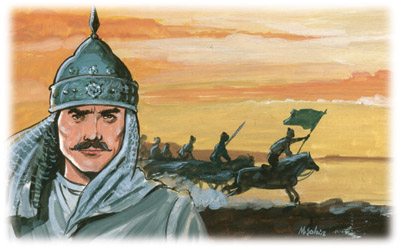
Where Are the Cumans? Where Are the Pechenegs?
In the 11th century, the Turks spread in three major waves in three directions:
The first was the expansion of the Kalach and other Turkic tribes into India under the command of the rulers of Ghazna. They went there as Muslims and carried the religion and civilization of Islam with them. The existence today of a Muslim population of nearly 500 million in India and its surroundings is the result of this invasion movement.
The second was the spread of the Oghuz Turks into Anatolia through Iran. The Oghuz had come there as Muslims. Now they dwell in these lands thanks to that.
The third invasion movement was toward the Balkans from the north of the Black Sea. The Pechenegs, Bulgars, Cumans, and Avars settled in the Balkan peninsula. Sweeping into the interior of Europe, they caused the people to tremble for centuries. Unfortunately, they had come there before entering Islam. Under the pressure of the surrounding Christian states, they soon forgot their religion, their language, and their identity; they lost their traditions. They melted away and disappeared among them. It is thus seen that Islam became the great and principal force that kept Turkish states and nations alive and standing. In Hungary, Southern Germany, Poland, Romania, Serbia, Ukraine, and Georgia, thousands of Turkic tribes melted away. Even today, the Christian population there carries Turkish blood at a rate of 50 to 80 percent. Zeki Velidi Togan says in Hatiralar (Memoirs) (p. 532): “Although an important part of the Turks had been under Russian rule since the 16th century, they were able to preserve their nationality thanks to Islam. The Baburid princess and poet Zebunnisa says in her poems that they are grateful to our Prophet because, within the Hindu multitude, they were able to remain as a dominant element without perishing.”
The Turks were essentially a warrior nation. With the help of Islam, they preserved their unity and solidarity. Thanks to the spirit of jihad ignited by this religion, they established strong, great, and long-lived states. They ruled vast territories. Through both war booty and the trade fostered by an environment of peace and security, they became the wealthiest nation in the world. Wealth flowed into their lands for centuries. The Mongols living in Central Asia who were not Muslim, on the other hand, although they occupied the world, remained backward in terms of civilization and materially poor. Had the Turks not become Muslim, they would either have remained in Central Asia as an authentic but insignificant community visited today by documentary researchers, or they would have been assimilated into the cultural fabric of Europe and the Middle East. Thanks to Islam, they were able to preserve their identity. They did not meet the fate of the Huns, Cumans, Avars, and Pechenegs. Kazim Karabekir says: “It is thanks to their acceptance of the religion of Islam that the Turks eliminated the Byzantine Empire and gave us our present dominant position. Otherwise, we would have remained as the Greeks of Kayseri within Byzantine civilization and religion.” (Paşaların Kavgası, "Struggle of the Pashas") If Christianity had in itself been a cause of progress, the condition of countries such as Abyssinia and Peru, which are deeply devoted to this religion, would not be as it is.
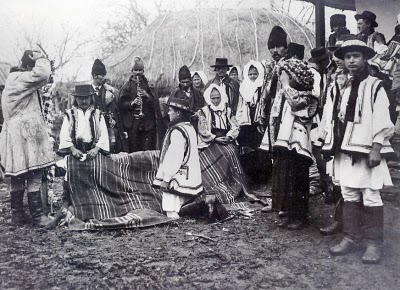
They Found Knowledge Ready at Hand
The Quran al-karim states that people were created as tribes, and that this is conducive to their knowing one another. Nevertheless, it accepts neither race, beauty, nor wealth as a cause of superiority, but only fear of Allah. This principle destroyed tribal asabiyyah (partisanship) and strengthened national consciousness. Muslim Turks renewed the aptitude in their genes by intermarrying and mixing with other peoples. Their culture became enriched. Intelligent and talented Balkan children, who at most could have become the priest of the town where they lived, were taken into the palace and, through special education and training, were able to rise to the highest ranks of the state. Thus both the merits of the imperial elements were utilized and they became acquainted with Islam. In this way, integration among peoples was achieved. America was able to become a superpower thanks to this genetic advantage. Moreover, while in Europe and especially in America a black person and a white person would not even be found in the same place, Muslim Turks saw no objection in marrying Muslims who were not of their own race and establishing households. This indicates the presence of a democratic structure in society.
The first Muslims advanced in science and technology and established a brilliant civilization. The Islamic world hosted many inventions. The Turks became heirs to this civilization. In a sense, they found many things ready at hand. But they developed this culture and brought it to a high aesthetic level. It is not without reason that when Europeans think of a Muslim today, Turks come to mind. The Ottomans adopted exactly the language of science established by earlier Muslim scholars. Indeed, after the Turks became Muslim, many Arabic and Persian words entered the Turkish language in order to meet new concepts. Thus the Turks came to possess a very rich and harmonious language. In this, the Persians, with whom the Turks were in close geographical contact, had an important influence. Even Arabic words passed into Turkish through the Persians. Thus a common language of science emerged with the Arabs and Persians. The emergence of a considerable number of scholars of fiqh (Islamic jurisprudence) from among the Turks also facilitated the entry into Turkish of terms related to this discipline. The language of Ottoman Law reflects the solid legal logic and its related literature formed by Islamic jurists in previous centuries. The first Ottoman jurists found a certain legal logic, philosophy, and literature ready at hand. They developed this accumulation within Ottoman culture and brought it to its classical style. If there had not been an established and rich intellectual and cultural accumulation among the Ottomans, the transition to Western culture in Turkey would have resulted in a complete fiasco.
Önceki Yazılar
-
POLITICAL POWER AND ITS INNER CIRCLES THROUGHOUT HISTORY21.10.2026
-
THE LAST EMPEROR’S SORROWFUL DAYS IN SAN REMO14.10.2026
-
WHO WAS THE OTTOMAN JUDGE?7.10.2026
-
“IF YOU REALIZE THAT YOU ARE WRONG, DO NOT HESITATE TO RETURN TO WHAT IS RIGHT!”30.09.2026
-
HE WAS TO BECOME SULTAN, YET HE DOES NOT EVEN HAVE A GRAVE: PRINCE ORHAN EFENDI23.09.2026
-
IS IMPRISONMENT A PUNISHMENT FOR THE CONVICT, OR FOR HIS INNOCENT FAMILY?16.09.2026
-
ABORTION AND INDUCED MISCARRIAGE IN HISTORY9.09.2026
-
EUROPE SHOULD LEARN TOLERANCE FROM THE EAST2.09.2026
-
A SULTAN IN THE GRIP OF THE MASONS: MURAD V26.08.2026
-
AN ANCIENT GREEK TRADITION AMONG CHRISTIANS: THE BETTER THE DOWRY, THE BETTER THE HUSBAND19.08.2026