(1).jpg)
THE SOLE FEMALE RULER OF TURKISH-ISLAMIC HISTORY
Razia Begum, who ruled in India 800 years ago, is the sole female ruler of Turkish-Islamic history. Alongside her brilliant achievements, her amateur mistakes prepared her bitter end. Both her life and her reign were short.
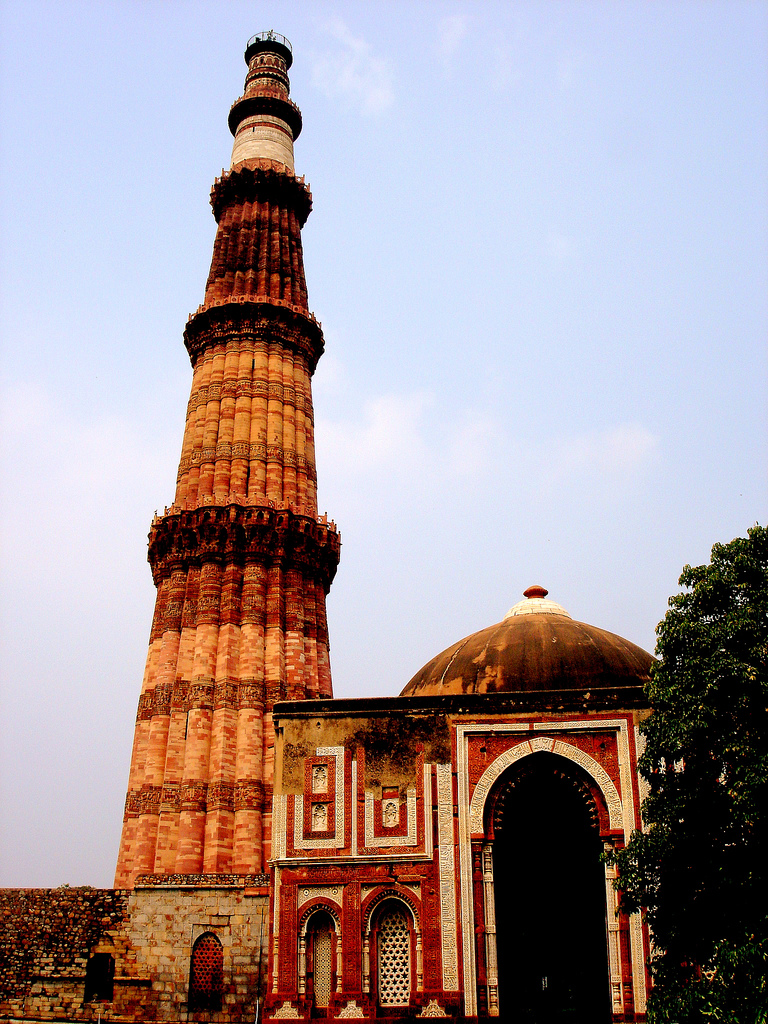
The Turks of Ghazna brought Islam to India in the 10th century. From that time until the British occupation in the 19th century, this continent was ruled for centuries by dynasties of Turkish origin. One of these Muslim Turkish states was the Qutbshahs. The oldest monuments in their capital city of Delhi and one of the most elegant and tallest minarets in the world, Qutb Minar, remain from them. Their sultans were of slave origin. Just like the Mamluks in Egypt, they became sultans with the help of merit and fortune. One of the most famous among them was Iltutmish. His daughter Razia Begum, who succeeded him, is the sole female ruler of Turkish-Islamic history. Begum is the feminine form of the word bey. In India, it is used for women belonging to the ruling family.
“She Is Superior to My Sons!”
Iltutmish spent his life on campaigns. He protected the Ahl al-Sunnah (Sunni doctrine) against the Batini movements. He did not allow the danger of Genghis Khan to enter India. He died during a campaign in 1236. Although he had sons, he bequeathed the throne to his daughter Razia, whose courage he had witnessed and whom he had not married off contrary to custom. The viziers objected, saying that a woman could not be commander of the army and that within the framework of religious principles preventing men and women from living together freely, Razia would not be well received by the public. They reminded him of the saying of the Prophet Muhammad (peace be upon him), “A nation that places a woman at the head of the state will not prosper.” However, Iltutmish did not listen. “My sons are devoted to pleasure. None of them has the ability to govern the country. Razia is a woman, but in intelligence and foresight she is superior to all her brothers,” he said.
When Iltutmish died in 1236, the viziers did not want to place Razia on the throne. They made Iltutmish’s son Firuzshah sultan. Firuzshah was gentle and generous, but extremely extravagant. While passing through the streets on an elephant, he would scatter gold to the right and left. He did not heed the advice of the viziers. In order to guarantee her son’s reign, Firuzshah’s mother had Qutb al-Din, the son of Iltutmish born from the same mother as Razia, killed. She was about to have Razia killed as well when the enraged public and some beys surrounded the palace and arrested the sultan’s mother. Taking advantage of this crisis, Razia convinced the viziers that only she could save the country and ascended the throne. Her first act was to have Firuzshah and his mother killed.
As soon as she ascended the throne, she was confronted with a Batini rebellion. The rebels, who were extremists among the Shias, had dared to raid the famous Juma Masjid in Delhi and massacre Muslims. Razia Begum personally took action with her skillful politics and succeeded in suppressing the rebellion. However, some of the beys persisted in refusing to recognize her. Razia Begum marched against them with her army and forced them all into submission. Thus, the local rulers in India obeyed Razia Begum. This time, Razia Begum marched against Bedenpur, which had been besieged by Hindus. She defeated the Hindus and rescued the Muslims there. Then she marched against Gwalior, where disturbances had broken out. She restored order.
In order to secure her throne, Razia Begum appointed to important positions those whom she considered close to herself. The Abyssinian-origin imrahor (master of the stables) Yakut (Jamal ud-Din Yaqut) became the closest person to the queen. This increased dissatisfaction. Moreover, the beys criticized Razia Sultan because she did not wear women’s clothing, but dressed like a man in a jubba, rode an elephant with her face uncovered, and moved among the people.
The Last Meal in the Desert
For this reason, opposition against her gradually spread. Although Razia Begum thought she could prevent cooperation among her opponents by granting rank and position to some of them, she was mistaken. In 1240, the Turkish beys rebelled and killed Yakut. Razia Sultan was arrested and imprisoned in a fortress. Her brother Bahramshah was placed on the throne. Razia Begum devised a plan. While imprisoned in the fortress, she married Malik Altunaya, one of the leading beys whom she had influenced with her beauty. Adding volunteers gathered from the public to her husband’s troops, she marched toward Delhi. However, she was defeated. Her husband was killed. Her troops abandoned her. Near Kaithal, she was left alone in the desert, weary, hungry, and thirsty. She asked a Hindu villager for bread. Then, under the effect of exhaustion, she fell asleep. Coveting her valuable garments, the villager killed Razia Sultan and buried her in a field. Later, the situation was understood. Her body was identified and buried again in the same place with a religious ceremony. Her reign lasted 4 years. She was 31 years old. Her son Sayyid claimed his mother’s throne years later in 1299 but was unsuccessful. Six centuries later, a woman again sat on Razia’s throne: Queen Victoria.
Razia Begum is one of the most important rulers of India, as well as one of the most interesting personalities of Turkish-Islamic history. If the mothers who acted as naiba (female regents) for rulers who ascended the throne at a young age are not counted, she is the sole female ruler of Turkish-Islamic history. Historians say that she received a good education and recited the Quran al-karim beautifully. She treated scholars kindly and was a generous and just ruler. She had beautiful poems written in Persian under the pen name Shirin-i Dehlavi. A historian says, “However, by nature she had not been endowed with what was counted among the qualities of men. For this reason, her exceptional attributes did not benefit her.” In the final period of her reign, she had fully assumed a male identity. She girded a bow, rode a horse, wore men’s clothes, and did not veil her face. She would appear among the people on an elephant and attend assemblies. However, it was not well regarded for rulers to appear frequently among soldiers and the public and show their faces excessively. Razia Begum was able to hold her throne for some time longer with an iron fist. Instead of relying on the Turkish beys inherited from her father, she preferred slaves of Abyssinian origin. She appointed them to important positions. She offended the powerful beys and even made them her enemies. This was her greatest mistake. She paid the price by losing her throne and even her life.
Önceki Yazılar
-
POLITICAL POWER AND ITS INNER CIRCLES THROUGHOUT HISTORY21.10.2026
-
THE LAST EMPEROR’S SORROWFUL DAYS IN SAN REMO14.10.2026
-
WHO WAS THE OTTOMAN JUDGE?7.10.2026
-
“IF YOU REALIZE THAT YOU ARE WRONG, DO NOT HESITATE TO RETURN TO WHAT IS RIGHT!”30.09.2026
-
HE WAS TO BECOME SULTAN, YET HE DOES NOT EVEN HAVE A GRAVE: PRINCE ORHAN EFENDI23.09.2026
-
IS IMPRISONMENT A PUNISHMENT FOR THE CONVICT, OR FOR HIS INNOCENT FAMILY?16.09.2026
-
ABORTION AND INDUCED MISCARRIAGE IN HISTORY9.09.2026
-
EUROPE SHOULD LEARN TOLERANCE FROM THE EAST2.09.2026
-
A SULTAN IN THE GRIP OF THE MASONS: MURAD V26.08.2026
-
AN ANCIENT GREEK TRADITION AMONG CHRISTIANS: THE BETTER THE DOWRY, THE BETTER THE HUSBAND19.08.2026